Trading Psychology
Risk Appetite and Risk Tolerance: How They Influence Investment Decisions?
Dec 30, 2025
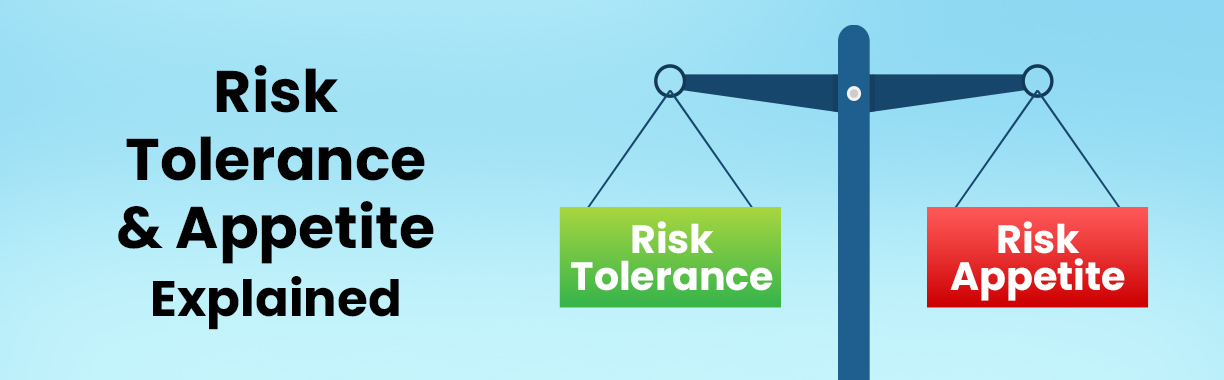
When people talk about investing, the conversation often turns to "risk", as every investment decision involves some degree of uncertainty. Some are comfortable with ups and downs, while others lose sleep over even small losses. To make sense of this, it is important to understand the difference between risk appetite and risk tolerance. Although the terms sound similar, they mean different things and play distinct roles in shaping financial decisions.
This blog aims to explain these concepts, show how they influence investment choices, and highlight why recognising the difference between risk appetite and risk tolerance can help individuals make more informed decisions.
What Is Risk Appetite?
Risk appetite is how much risk a person is willing to take in pursuit of potential returns. It is closely linked to mindset, personality, and long-term goals. Someone with a high-risk appetite may be comfortable investing in assets that fluctuate widely in value because they are focused on growth over time.
For example, a young professional aiming to build wealth over 25 years may be open to higher volatility if it increases the chance of higher long-term returns. This willingness reflects their personal outlook on uncertainty rather than their financial capacity alone. When talking about risk appetite, it answers the question: How much uncertainty am I prepared to accept? Understanding this helps clarify the difference between risk appetite and risk tolerance, as appetite is about preference, not limits.
What Is Risk Tolerance?
Risk tolerance, on the other hand, is about how much loss or volatility a person can withstand without facing financial hardship or emotional distress. It takes into account income stability, savings, liabilities, age, and time horizon. For instance, two people may both enjoy taking risks, but if one has irregular income and limited savings, their ability to absorb losses is lower. That person's tolerance is more restricted, even if their appetite is high.
This highlights the difference between risk appetite and risk tolerance: tolerance is grounded in financial reality, while appetite reflects attitude.
Difference Between Risk Appetite and Risk Tolerance
When you understand the difference between risk appetite and risk tolerance, it becomes easier when you look at them side by side:
- Nature: Risk appetite is subjective and preference-driven; risk tolerance is objective and capacity-driven.
- Influences: Appetite is shaped by personality and goals, while tolerance depends on finances and life stage.
- Stability: Appetite may change with market sentiment, whereas tolerance tends to shift only with major life events.
This distinction is often summarised in discussions around risk appetite vs risk tolerance, a phrase commonly used in financial planning frameworks.
| Aspect | Risk Appetite | Risk Tolerance |
|---|---|---|
| Meaning | Willingness to take risk | Ability to handle risk |
| Nature | Forward-looking and aspirational | Behavioural and emotional |
| Focus | Desired outcomes and growth | Comfort with losses and volatility |
| Change due to | Goals, time horizon, return expectations | Market experience, financial stability, emotions |
| Role in investing | Guides strategy and assets alocation | Determines sustainability of the strategy |
How They Influence Investment Decisions
Investment decisions are most effective when risk appetite and risk tolerance are aligned. A mismatch between the two often leads to inconsistent behaviour and poor timing decisions. When alignment exists:
- Investors mostly stay invested during a volatile market.
- Portfolio choices remain consistent with long-term goals
- Emotional decision-making is reduced
When misalignment occurs:
- Investors may exit or consider exiting investments prematurely
- Short-term market movements can derail long-term plans
- Rebalancing and diversification strategies may be ignored
Consider a mid-career individual saving for retirement and a child's education. They may like the idea of higher returns but also need stability. Recognising the difference between risk appetite and risk tolerance helps balance ambition with caution. This balance is often described as aligning risk appetite and risk tolerance so that investment choices feel comfortable and sustainable over time.
Why Misunderstanding These Concepts Can Be Risky
Confusing the two can lead to poor decisions. If someone focuses only on appetite, they may take on more volatility than they can realistically handle. If they focus only on tolerance, they might be overly cautious and fall short of long-term goals.
For example, during market downturns, investors who overestimated their tolerance may panic and exit at unfavourable times. Knowing the difference between risk appetite and risk tolerance can reduce emotional reactions and encourage consistency.
This is why many financial education resources emphasise understanding what is risk appetite and risk tolerance before discussing asset choices.
Applying the Concepts in Real Life
In practical terms, these ideas help individuals choose investments that align with their mindset and circumstances. A clear understanding of risk appetite and risk tolerance allows people to set expectations realistically. Life events such as marriage, a new job, or nearing retirement can shift tolerance, while changes in outlook may affect appetite. Revisiting them from time to time ensures that your decisions are aligned.
Ultimately, recognising the difference between risk appetite and risk tolerance supports better decision-making across different market conditions.
Conclusion
Understanding how personal preferences and financial capacity interact is central to making thoughtful investment decisions. While risk appetite reflects willingness, risk tolerance defines limits. Keeping both in mind can help individuals approach markets with greater clarity and confidence.
To deepen your understanding of financial concepts and decision-making frameworks, explore the educational resources and market insights available from Indiabulls Securities (formerly known as Dhani Stocks), designed to support informed participation in financial markets.
FAQs
1. Can risk appetite change more frequently than risk tolerance?
Yes. Risk appetite may shift with market sentiment, news, or personal confidence, while risk tolerance usually changes only after significant financial or life events.
2. Do professional investors also assess these concepts?
Absolutely. Institutions often define formal frameworks to assess appetite and tolerance before setting strategies or limits.
3. Is one concept more important than the other?
Neither is more important; effective decisions come from understanding how both work together.
4. Should these be reviewed regularly?
It is useful to reassess them periodically, especially after major changes in income, goals, or responsibilities.
Disclaimer: The contents herein are only for information and do not amount to an offer, invitation or solicitation to buy or sell securities or any other financial product offered by Indiabulls Securities Limited (formerly Dhani Stocks Limited / DSL). The content mentioned herein is subject to updation, completion, amendment without notice and is not intended for distribution to, or use by, any person in any jurisdiction where such distribution or use would be contrary to law or would subject Indiabulls Securities Ltd. (formerly Dhani Stocks Ltd. / DSL) to any licensing or registration requirements. No content mentioned herein is intended to constitute any investment advice or opinion. ISL disclaims any liability with respect to accuracy of information or any error or omission or any loss or damage incurred by anyone in reliance on the contents herein. This blog is based on information obtained from public sources and sources believed to be reliable, but no independent verification has been made about its accuracy or its completeness is guaranteed. This content mentioned in this blog is solely for informational purpose and shall not be used and/or considered as an offer or invitation or solicitation to buy or sell securities or other financial instruments. ISL will not treat recipients as customers by virtue of their receiving this report. The securities / Mutual Fund units (if any) discussed and opinions expressed in this blog/report may not be suitable for all investors. Such investors must make their own investment decisions, based on their investment objectives, financial positions and specific needs. ISL accepts no liabilities whatsoever for any loss or damage of any kind arising out of the use of this report. Past performance is not necessarily a guide to future performance. Investors are advised to see Risk Disclosure Document to understand the risks associated before investing in the securities markets. ISL may have issued other blogs that are inconsistent with and reach different conclusion from the information presented in this blog.
Indiabulls Securities Limited (formerly Dhani Stocks Limited) is a Mutual Fund Distributor registered with ‘Association of Mutual Fund of India’ (AMFI) vide ARN number ARN-160411. Corporate Identification Number: U74999DL2003PLC122874; Registered office address: A-2, First Floor, Kirti Nagar, New Delhi - 110008. Tel.: 011-41052775, Fax: 011-42137986.; Correspondence office address: Plot no. 108, 5th Floor, IT Park, Udyog Vihar, Phase - I, Gurugram - 122016, Haryana. Tel: 022-61446300. Email: helpdesk@indiabulls.com